Tuesday, July 1, 2014

Six Superb "Human Interest" Documentaries


I love documentaries.  Even the most biased ones still have the ability to impart useful information if you can successfully sift through the rhetoric and prejudice.  While a truly impartial film is an impossibility, that is just as well since personal feelings and testimony are usually what makes documentaries so entertaining.  The six movies listed below are no exception, and all of them have a common theme: the human condition.  Whether the subject is what we think or feel or believe, each of these documentaries delves into a facet of human life that I find fascinating.


“A Certain Kind of Death”

Everyone has their own ideas about what happens when we die, but one thing is certain; whether it is a grand, public ceremony or a small, quiet service, all of us would like to be fondly remembered by our family and friends.  But what about the deceased that don’t have loved ones to attend to their last wishes?  What do you do with an unclaimed body?  “A Certain Kind of Death” examines the procedures that local government services provide for those who die and have no relatives to make arrangements.  This film's particular perspective is not readily apparent at first, but it creates a subtle and unique impact upon the viewer.


All of the people interviewed for “A Certain Kind of Death” offer no opinions or personal observations about their jobs.  All they do is describe their part in the process while we watch what happens to the bodies.  The absence of emotional testimony is very refreshing.  All documentaries suffer from bias, but “A Certain Kind of Death” does a superb job of making the viewer feel like they can decide for themselves whether what unfolds honors the unmourned or leaves something to be desired.  Squeamish folks are warned to have the remote ready as there are a few unpleasant scenes involving just discovered corpses.


“Who the #$&% is Jackson Pollock?”

Anyone remotely associated with the art world knows about Jackson Pollock, but how many career truck drivers are familiar with the man who broke new ground with his splatter paintings?  Teri Horton had no clue who the #$&% Jackson Pollock was, but after a fateful purchase at a five and dime store, this 73 year-old woman suddenly discovered that she may have bought one of Pollock’s lost works for the staggering sum of five dollars!!


The film follows Horton’s agonizing attempts to authenticate her purchase, and the culture clash that erupts between this blue collar worker and the blue-nosed art snobs is hilarious and very revealing.  Teri Horton never had a higher education, but her common sense and tenacity keep her going despite the sneering derision heaped upon her.  Though the film lacks a resounding conclusion, it is a fascinating portrait of two very disparate strata of society, brought contentiously together by a mutual need for validation.


“Dear Zachary”

Have you ever loved someone who wasn’t just “a little off” but actually insane?  Most of us are fortunate enough to find a life partner who is not a ticking time bomb of psychosis.  Andrew Bagby was not so lucky.  A sweet and soulful young man, Andrew was loved by all who knew him.  Then he met Shirley Jane Turner, and the slow, inexorable way in which his simple world collapsed into a mental nightmare is horrifying.


Andrew Bagby & Kurt Kuenne

“Dear Zachary” is impossible to summarize without revealing information of colossal spoiler value.  It is an utterly heartbreaking story, and the end is a shocking gut punch, especially when you realize who made this film.  Andrew Bagby’s lifelong friend, Kurt Kuenne was solely responsible for every aspect.  Despite the tragedy, this film deserves to be seen, as it is a poignant and affecting tribute to a dear friend.  A box of tissues is required.


“In the Realms of the Unreal”

Henry Darger was 81 years old when he died in Chicago in 1973, but no one could have suspected that this quiet little janitor would rock the art world with one of the greatest discoveries of the modern era.  Henry Darger had few friends and led a reclusive life, but after Darger's passing his landlord unearthed a historic treasure trove of writings and artworks in the deceased's apartment.  For decades Darger had labored over a 15,000 plus page novel and multiple massive painted canvasses, some as large as 12 feet across.  The sheer volume of written and visual work astounds the eye and overwhelms the mind with its epic scope.


“The Story of the Vivian Girls, in What is Known as the Realms of the Unreal, of the Glandeco-Angelinian War Storm, Caused by the Child Slave Rebellion” is a monumental work of fiction.  What is even more astonishing is that Henry Darger was self-taught.  He never graduated from any school nor took any formal training of any kind.  Yet Darger was able conjure an amazingly detailed story and compose colossal watercolor illustrations that comprise a fantastic story of grand mythical adventure.  Though his living years were spent in total obscurity, Henry Darger left behind an artistic legacy that is an enthralling testament to the power of imagination and creativity.


“Prodigal Sons”

Like many young married couples, Loren and Carol McKerrow greatly desired children.  Believing themselves incapable of having their own, Loren and Carol adopted a young boy and named him Marc.  However, on the day of Marc’s homecoming, Carol discovered that she was pregnant for the first time.  The new parents choose Paul as the name for their biological child, and another son, Todd, was born soon after.  What begins as a rose-colored story of a happy quintet morphs into a mesmerizing tale of identity crisis and transformation. The fact that this family remained together and supported one another through such extreme changes is a sterling example of what “family values” ought to mean.

Carol McKerrow, Marc McKerrow & Kimberly Reed

Paul realizes that she is transgender, and undergoes the difficult process of transitioning into being Kimberly Reed.  Todd struggles to come to terms with being homosexual, and their adopted brother Marc exhibits increasing mental problems and has to be committed.  A further bombshell occurs when it is discovered that Marc is related to one of Hollywood's most famous directors.  The amount of growth, acceptance and forgiveness that the McKerrow family experiences and embraces is harrowing and exhilarating.  Watching these brave souls trying to make sense of their place in the world is incredibly inspiring, and the film captures all of these moments with a tenderness that will have you weeping with joy at the inner beauty that shines forth.


“Cane Toads”

As all of the above documentaries are quite intense, I want to end with one that is funny and lighthearted.  “Cane Toads” is one of the best human interest documentaries I’ve ever seen.  The film begins with a jaw-dropping governmental goof: the introduction of the Cane Toad into Australia.  It was hoped that the Cane Toad would consume and thereby curb the cane beetle pest.  However, the two species never encounter each other in their natural habitats and the Cane Toads proceed to eat everything else.  RESEARCH, people!  Look into it!  The Cane Toads have no natural enemies in Australia, and so their population explodes.


While the facts of this biological blunder are fascinating, the rogues’ gallery of quirky locals and officials who are interviewed provide the true entertainment.  The variety of human responses to the Cane Toad invasion is enthralling, and the personalities and stories are by turns heartbreaking, hilarious and exceedingly irreverent.  While some have lost pets to the Cane Toads’ poison, others smoke it to get high!  Some run over every single toad on the road while others feed them from their back porch like pigeons.  The Cane Toad may be the subject of the film, but it is the humans who are the stars.

Thursday, June 26, 2014

"How To Train Your Dragon 2" review


A superlative sequel in every way!

I regret missing the first “How To Train Your Dragon” film in theaters.  While watching the DVD was still an exhilarating experience, I knew that certain scenes would have had a much more memorable impact on the big screen.  The sweeping majesty of the flying sequences rocked me to the core, and the story and character development was equally excellent.  These elements combined to give the initial film a visual and emotional resonance that hit me right in the feels.


Sequels are a potential minefield.  How to balance audience expectations against moving the franchise forward in new directions?  Having a literary source is a big plus.  Having such talented artists and writers who are willing to take chances is also an advantage, for it is a rare skill to know when to execute the unexpected in a way that makes sense.  Finally, understanding the characters and how the story needs to evolve is necessary to achieve an ending that is resounding in its victory yet bittersweet because of the cost.  “How To Train Your Dragon 2” accomplishes all these things and more. 

 
The variety of landscapes and environments is a feast for the eyes, and the sumptuous visual design is jaw-dropping on the big screen.   The characters have grown from children into young adults.  Hiccup has become a steampunk inventor of Jedi-like talents, and his new contraptions are a delight to behold.  Astrid continues to be a leading lady of strength, skill and wit that makes the feminist in me pump my fist for girl power!  Hiccup’s relationship with his father faces a new test, and the outcome is yet another heartbreaking example of why this series continues to be so engrossing: risks.


As in the original film, there is a price to be paid for growth.  Hiccup survived his first battle, but lost a foot.  Like his dragon Toothless, Hiccup is now missing part of his original self.  Yet Hiccup is still expected to become chief of his village, and when the peaceful harmony of the dragon riders of Berk is threatened by a ghost from the past, Hiccup has to confront a much greater loss.  One story thread is snapped, and another returns to be rewoven.  I wept with joy and sorrow, and cannot wait for the next chapter in Hiccup’s journey towards adulthood!


Tuesday, June 10, 2014

"Cold in July" review


A slow burn Neo-noir, Texas-style!

When I saw “Drive” with Ryan Gosling, I was initially entranced by its mood, music and volcanic violence.  Soon afterward, questions began to burble up in my mind, and I realized that although I enjoyed the film, its flaws outweighed its cool factor.  “Cold in July” is similar in many ways:  it also has hastily sketched characters, a great soundtrack and gushing geysers of blood.  Thankfully, this film's brooding tone is lightened by a liberal layer of ham and wry.  "Cold in July" is a southern-fried popcorn flick, but consarn it, it’s a good ‘un!


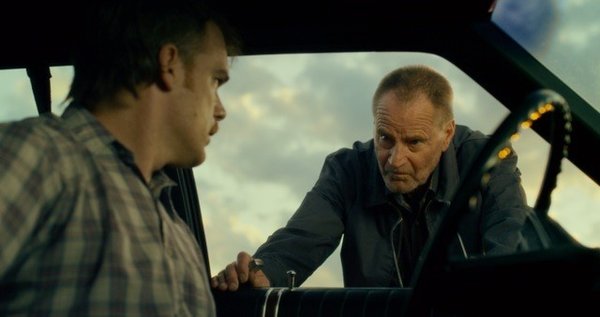
Michael C. Hall plays Richard Dane, a frame shop owner who fatally shoots a burglar in his home to protect his wife and young son.  This incident lights a fuse leading to multiple boxes of shit, the only question being when each one will explode.  I admire Hall’s attempt shed his serpentine "Dexter" skin by choosing to play a much more wholesome and ethical character, but Hall's emotive range still feels very limited and the one-note performance threatened to flat-line my interest.


Then Sam Shepard appears, and things perk up immediately.  All Shepard needs to do is level his stare and I am petrified.  As ex-con Russell, Shepard is not a father figure to fuck with, especially when he has vengeance in mind.  The economy of Shepard’s acting is astonishing, and his presence casts an aura of inescapable doom.  Don Johnson round outs the roguish trio with puckish amiability as Jim Bob, the pig farmer and PI for hire.  In defiance of the advancing darkness, Jim Bob adds just the right dose of humor.  His quips are like sparks from a campfire, and the twinkle in Jim Bob's eye says; "Saddle up, hoss!  We’s a-gonna have us some fun!"


Richard Dane just wants to be left alone, but his earnest efforts to keep his family safe only arouse further assault by the rattlesnakes nest of criminal forces that Dane has unwittingly provoked.  However, Dane cannot ride this trail alone, and the local police merely make matters worse.  Therefore, Dane must ally himself with Russell and Jim Bob and together this unlikely posse sets out to expose corruption and execute justice.  Though the final act is awash in aortic explosions, the climax is an emotional killer because it confronts us with the most heartbreaking decision that any father could be compelled to make.

Sunday, May 18, 2014

"Godzilla" 2014 review


Third time’s the charm!

Godzilla is a major monster from my childhood.  I have many happy memories of enjoying even his silliest adventures on TV many a Saturday afternoon.  As I grew older and watched Godzilla transition from villain to hero and back again, I admired the resiliency of the character.  While both American attempts to tell Godzilla stories had fallen short, it is a testament to Godzilla’s appeal that he endures as a pop culture icon.  I had seen Gareth Edward’s first film, “Monsters”, and was thrilled to discover a director who understood that without human characters we care about, the inhuman destruction can quickly become a tedious pyrotechnics display.


Gareth Edward’s “Godzilla” is possibly the best American giant monster movie of all time.  It honors the character’s origin and legacy while adding just the right amount of technical wizardry to infuse this long-running franchise with a fresh and exciting feel. The strong human focus grounds this Godzilla film like no other.  The excellent cast acquits themselves admirably, making this the first time that I actually cared about the people as much as the monsters!


Godzilla takes his sweet time before revealing himself, but the build-up is sensational, and when Big G finally appears, the moment is as massive as he is. Throughout the film, the word that kept coming to my mind was restraint.  Director Gareth Edwards exercises phenomenal restraint, slowly building up the anticipation.  Even after the kaiju chaos begins, the brief glimpses of monster mayhem tantalize in the extreme.  Edwards patiently waits until the third act before opening the entire can of whoop-ass, but the extended foreplay results in one hell of a G-gasm!


At the first, long-awaited blast of atomic breath, the audience broke out in cheers, and when the credits rolled applause erupted and continued for several minutes.  As satisfied as I was, I turned to see my wife dabbing her eyes!  I knew she loved Bryan Cranston, but what a wonderful surprise to discover that she now loves Godzilla too!  How could I conjure a greater compliment for this film?  I knew I was going to enjoy it, but if you can get my sweetie’s waterworks gushing over a movie about a humongous, radioactive lizard, you’ve got talent!


Finally, I have to mention restraint again.  There has been a lot of complaining about how short many of the monster fight scenes are, but I believe this is a very conscious and wise decision for several reasons.  First, shorter scenes help preserve the sense of awe experienced just in seeing the monsters and the audience is always left wanting more.  Second, director Edwards knows that there will be sequels, and by not pulling out all the stops he gives the succeeding films more breathing room to create their own, awesome set pieces.  Muto lives!


Wednesday, April 30, 2014

CGI, bane or blessing?


Can be Good, If. . .

A very brief look at the rise of CGI in cinema

Classic Effects


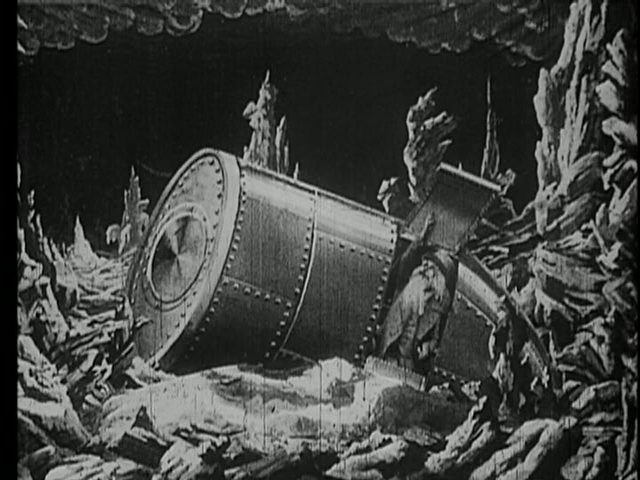
The history of special effects dates back to film’s inception.  Directors such as George Melies and Fritz Lang realized fantastic visions using many tricks from photography as well as inventing new ones.  A great part of the enduring appeal of this early work is the fact that everything was made by hand.  It is easy to relate to the experience of working with your hands and the satisfaction derived from having a tangible creation as the finished product.  Therefore, the audience’s appreciation is greatly enhanced when they can have some understanding of how much time and effort went into the special effects of these early films.


For decades, talented artisans of all kinds pioneered new techniques in special effects and developed new tools to achieve them.  They enriched the visual world of the films on which they worked and passed on their skills to succeeding generations.  Legacies were established, and many of these artists became as well known as famous actors and directors due to the breadth of their work and the creative inspiration that continued to drive them.  Companies were born specifically to supply special effects to whichever studio desired their services.


No one knew it at the time, but in the early seventies a short film appeared that would change everything.  While short films were certainly nothing new, the technology being utilized to make them was: computers had grown beyond their vacuum tube infancy and were just beginning to be able to render three dimensional images.  Edwin Catmull and Fred Parke created “A Computer Animated Hand” for a graduate project, and pieces of this eponymous film were later used in the 1976 sci-fi thriller “Futureworld.”  Quite a portentous title!  CGI as a special effects tool was now a reality, and its use in Hollywood would grow exponentially in the years to come.

Early Successes


At first, the computational limitations of early processors resulted in effects that no doubt appear crude to modern eyes, yet were cutting edge jaw-droppers at the time.  Perhaps the most famous film to use incipient CGI to a large extent is the legendary Disney film “Tron.”  Though the design of the virtual world of “Tron” is quite simple, it perfectly fits the embryonic technology.  It’s also quite a lovely irony that the deadly computer world that our heroes must survive was created almost entirely by computers!  It is a perfect evocation of the film’s theme, and it also wonderfully foreshadows how computers would come to dominate our actual lives.


“The Last Starfighter” is a lesser-known example of early CGI, but is a personal favorite of mine.  Even though the film is science fiction, this time CGI is used to simulate something real:  outer space.  The simplicity of this environment meant that more time could be spent developing and detailing the spaceships that would be battling for the fate of the galaxy.  Again, these effects may look simple, but they work well because the film doesn’t aspire to epic proportions.  "The Last Starfighter" is tween entertainment, and need not abound in overwhelming imagery.


James Cameron’s “The Abyss” is an excellent example of the proper application of CGI within a film already heavily reliant on practical effects.  The production was legendary in its on-set challenges for the actors, as Cameron was adamant to shoot as much of the movie as possible using real equipment and environments.  However, the alien pseudopod, composed entirely of water, presented a unique challenge.  The final product is still an effective and stunning sequence, and is also a sterling example of how and when CGI should be used:  when nothing practical is possible.

Overkill


Unfortunately, the success of the pseudopod led to an almost exclusive use of CGI effects.  They often took less time to complete than traditional, practical effects, and usually required less money.  All of sudden, like a viral spore, CGI usage exploded and infected nearly every genre.  Filmmakers discovered that they had almost no limitations on what they could put onscreen, and cinema audiences were suddenly drowning in a flood of films that seemed to serve no other purpose than to show how easily directors could be seduced into indulging every visual whim, whether it was pertinent to the film or not.


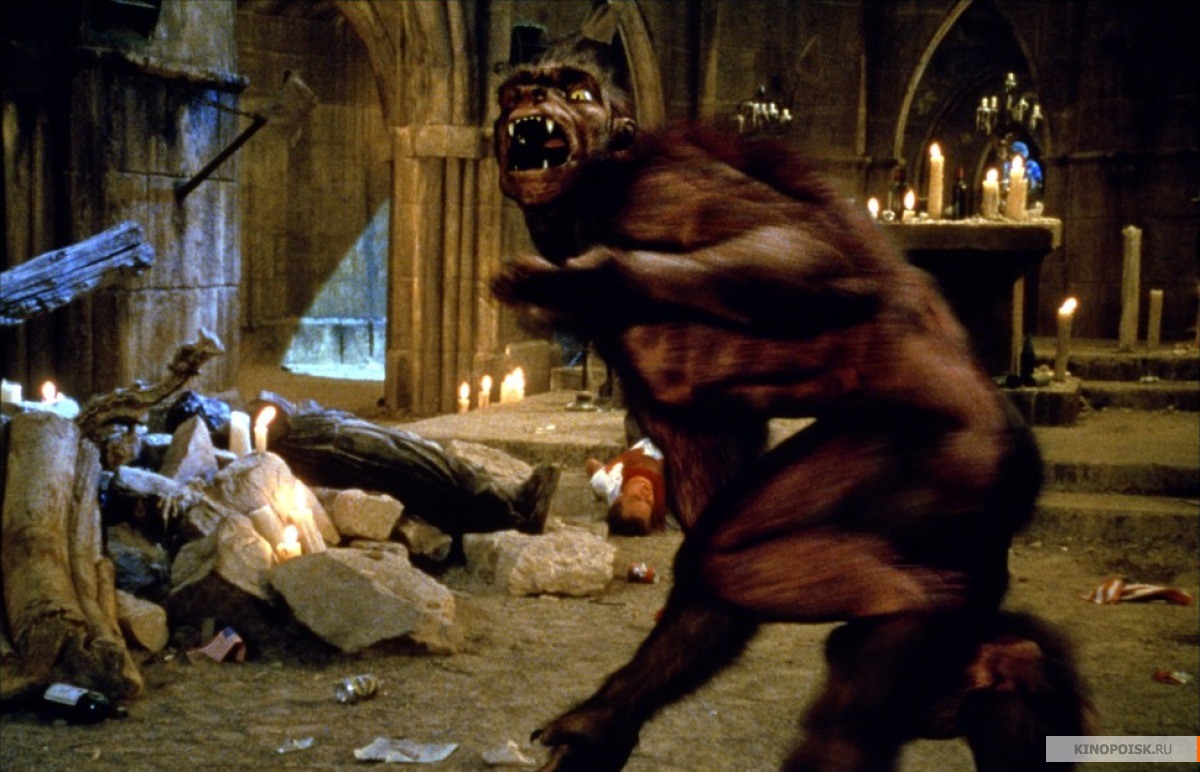
Fantasy and horror films have become almost wholly populated by CGI creatures, and most of them are not convincing because the audience can tell that there’s no physical presence to provide a real threat.  While a man in a monster suit is often easy to spot, at least it is something real.  These days, the actors on the set often have to pretend to be scared of a piece of tape on the end of stick!  There’s also the fact that human movement contains little variations, and the too-smooth motion cycling of computer programs is very easy to detect.


Aside from the over-detailed and unconvincing visuals, the content of these films suffered greatly.  Story and character elements became thinly veiled excuses to transition from one special effects sequence to the next.  George Lucas once infamously said; “A special effect without a story is a pretty boring thing.”  Prophetic words indeed, not only in terms of his own franchise!  For the vast majority of horror and science fiction films over the next two decades, the special effect became the story.


Furthermore, now that CGI usage dominated the industry, the demand for traditional, hand-crafted effects work receded rapidly and the artists employing them were faced with hard choices.  Their time-honored talents and techniques were now regarded as old hat or worse, obsolete.  Many companies were forced to abandon their traditional effects work and turn their studios into warrens of cubicles.

Of course, this is not to say that the intense work required to produce quality CGI is any less important, difficult or artistically challenging than practical effects.  
There are some phenomenal CGI companies out there producing superlative work.  I'm just an old-school, nostalgic grumpus who likes to see balance in all things, and for me the pendulum is long overdue to swing back to more practical effects being used where they can.  There's too much CGI now, and it's losing its ability to feel fresh, vital and interesting when EVERYONE is using it as often as possible!

Notable Exceptions


I don’t want to come across as a totally bitter crank, so I take great pleasure in mentioning a few examples where even in the midst of the CGI tsunami, artistry and integrity remained alive.  While “Star Trek: The Motion Picture” was a success, the plodding pace of the film was further undermined by many unfinished special effects.  However, when the Director’s Cut was issued on DVD in 2001, it was decided that several extended sequences would be finished and incorporated into this new version.  The special effects house tasked with updating these scenes knew that film grain needed to be added to the high-res CGI in order for them to properly blend in with the hallowed celluloid.


The results are spectacular, in particular because of the awareness that the resolution of CGI and celluloid is different.  If all of the modern special effects houses understood this, much of the work that has already been released would look much better!  SO many CGI effects in movies fail to work properly because they’re too sharp, too clean or the blacks don’t match.  The film screen must be cohesive.  It must present a unified vision.  Special effects that stand out are in opposition to their function.  They should enhance the reality instead of calling attention to the unreality.


Peter Jackson’s Lord of The Rings trilogy is an excellent example of how great films can be when a director understands that CGI is just one tool instead of the only tool.  The all-inclusive production and design of the trilogy is a benchmark of film-making.  Every special effects technique is used.  Beautiful set design, with real sets!  The endless hours making those mountains of chain mail!  Matte paintings!  Big-atures!  There is such a variety of much hand-made, lovingly crafted work, and it all shows.  Even though we’re watching a fantasy film, there is so much reality onscreen!


Gollum, a wholly CGI creation, benefits specifically from the human touch.  Instead of attempting to contrive emotion after the scenes with the actors have been shot, the motion capture of Andy Serkis’ on set performance was used as the basis for animating Gollum.  The result is one of the most affecting portrayals yet of a CGI character, solely because the source is an actual human, not a set of algorithms!  The success of this character has thankfully led to an increased use of actor-based motion capture performances, most recently for Smaug in the Hobbit films.  Here’s hoping that this becomes an industry standard!

Well, there you have it!  I hope you enjoyed it, and I dearly hope we all get to see more films in the future that strike a proper balance between the old and the new!


Wednesday, April 16, 2014

"20 Feet from Stardom" review


 A soul-stirring survey of superlative singers

Everyone has a rock star inside them, screaming to be let loose.  I must confess that I have rocked an air mike for years!  At the end of a bad or good day, music either purges my stress or electrifies my joy as I imagine myself belting out the words and notes that express what’s inside me.  Part of the satisfaction derives from believing that the voices that move me are living their dream of being recognized and celebrated for their ability to connect so intimately with such a large audience.  Yet the reality is that even with talent in abundance, the spotlight remains elusive.


“20 Feet from Stardom” examines the lives of backup singers from many famous groups and solo acts and shows us how little appreciation they have received despite decades of dedicated labor.  It’s a tough gig, this business of show, and hard work doesn’t always pay off.  A fortunate few do get a solo shot, but there’s no guarantee of success.  Timing and coincidence play their fickle parts, and even the most driven individual can be brought up short.  It’s heartbreaking, especially when you hear them at the microphone creating sounds that make the hair stand on end.


Perhaps the biggest surprise of the film is the revelation of how far back lip syncing has been an integral part of the music industry.  What’s worse is how many of these “performers” were lip syncing to someone else’s voice.  I thought that the Milli Vanilli fiasco was an isolated incident.  Nope!  Back up singers have routinely had their abilities plundered to make models into superstars, and this theft continues to be shamelessly perpetrated.  Even if the person at the mike can sing, it’s likely that their vocals will be “improved” or “enhanced” later.  No wonder I dislike the majority of modern pop music.  I don’t want a computer to sing to me!


I want to hear flesh and blood, not circuits and hard drives.  I need a soul in pain or ecstasy to exhort me to move or fight or love.  They don’t have to be svelte.  They don’t have to be white.  They just have to be real.  As with acting, singing successfully requires the artist to be an open book.  You must give a part of yourself to the work in order to grab the audience’s attention because they’ll know if you’re faking.  The amazingly talented people profiled in this documentary are certainly not faking, and it’s heartening to see that they are still happy.  Though stardom has eluded them, they continue doing what they love.  You can hear it loud and clear.

Tuesday, March 18, 2014

"Antwone Fisher" review


 A compelling chronicle of a childhood crucible

Denzel Washington is one hell of an actor.  It is a lesser known fact that he is also one hell of a director.  While his first feature is a striking examination of the legacy of slavery, it is thankfully not a “message” movie.  The themes are strong and omnipresent, but they don’t drown out the drama with off-putting proselytizing.  Instead of broadcasting the issues with the subtlety of a bullhorn, the emotional and psychological grist is ground within the characters.


Antwone Fisher is an ensign in the Navy with major rage issues.  After a series of sudden set-tos, he is sent for counseling.  At first obstinately silent, Antwone slowly begins to open up.  His psychiatrist, Dr. Jerome Davenport (Denzel in an excellent supporting role) urges Antwone to reconnect with his long lost family.  The good doctor is well aware that self-realization is just one of many difficult steps on the path to maturity.  He urges Antwone to investigate his painful history, knowing it contains the key to Antwone’s future happiness.


Derek Luke’s performance as Antwone Fisher is heartbreakingly vulnerable.  He evokes all the anger, confusion and feelings of betrayal an abandoned orphan would struggle with, yet also displays charm and genuine warmth in his introspective moments.  Antwone has begun to date a young woman (who is also in the Navy) and the humor and tenderness he reveals in their scenes together gives his good side a chance to shine.  Though Antwone has suffered heinous abuse, his humanity has not been beaten out of him.


As Antwone’s search for his family progresses, it appears that the mystery surrounding Denzel’s psychiatrist character and his marriage troubles are going to be left unresolved.  Thankfully, Denzel’s directorial attention to detail doesn’t lapse and the final scene is almost more euphoric and healing than the redemption of Antwone’s past.  The relationship between these two men began as a purely professional and clinical connection.  It has now nurtured powerful and positive growth for both and established a lifelong bond.  It is the beginning of a beautiful friendship.